- Details
- Written by: Bob Hembree
- Category: General News
- Hits: 336
More Arizona Families to Receive Down Payment Assistance Under Expanded State Program
By Bob Hembree
Governor Katie Hobbs announced Tuesday a $5 million expansion of Arizona's homeownership assistance program, bringing the total investment to $18 million to help first-time buyers with down payments and closing costs. The expanded "Arizona Is Home" program aims to double the number of first-time homebuyers receiving assistance, with officials estimating the additional funding will help approximately 140 families purchase homes in Maricopa and Pima counties.
"By putting homeownership within reach, we're helping working families unlock the Arizona Promise and build their future right here in Arizona," said Arizona Gov. Katie Hobbs. "Through Arizona Is Home, we've turned the dream of owning a home into a reality for hundreds of Arizonans, and now even more Arizonans will have that same opportunity."
Program Details and Funding
The additional funding comes from the Arizona Rescue Plan Act, using federal COVID relief dollars to address housing affordability challenges across the state. The expansion builds on an earlier $13 million program that provided financial assistance to about 500 home buyers throughout Arizona.
According to the governor's office, the additional dollars should help purchase 65 homes in Maricopa County and provide $9,000 assistance for 75 would-be homeowners in Pima County. Rural counties throughout the state, including Coconino and Gila counties, already received their second infusion of program dollars, with 589 homes purchased through the program in Arizona's 13 rural counties.
However, as of July 2025, all available funds for the Arizona Is Home Program have been expended, and no new reservations are currently being accepted due to volume constraints. There will be no new funding for the Arizona Is Home program for the remainder of 2025, though this does not impact the separate Home Plus down payment assistance program, which remains available year-round.
Eligibility and Requirements
For residents in Coconino and Gila counties, the program targets first-time home buyers who have been Arizona residents for at least six months. Eligible homebuyers must have annual incomes at or below 80% of the Area Median Income (AMI), though there was a temporary increase to 100% of AMI that was in effect through the end of 2024.
Eligible homebuyers who are at 80% or below Area Median Income are eligible to receive up to $30,000 and homebuyers who are between 81% to 120% of AMI are eligible to receive up to $20,000. The program requires buyers to have a credit score of at least 640 and mandates completion of an 8-hour homebuyer education class along with meeting one-on-one with a HUD-certified Home Ownership Advisor.
Partner Organizations Support Expansion
The Arizona Is Home mortgage assistance program works through three existing lending organizations to maximize reach across eligible populations.
"The Arizona is Home Program has played a crucial role in bridging the affordability gap for hardworking individuals striving to become homeowners," said Brenda Lopez, Chief Homeownership Officer at Trellis. "By offering down payment assistance, interest rate reductions, and housing counseling, it has empowered many families to achieve their dream of owning a home when they otherwise would not have been able to."
"Chicanos Por La Causa, Inc. is delighted to be able to help low to moderate income and first-time homebuyers with resources, like the Arizona Is Home Program, to bridge the financial gap to purchase their first home," said Patricia Garcia Duarte, Executive Vice President, Homeownership Initiatives at Chicanos Por La Causa. "Even in challenging housing markets, the reality of homeownership is possible when down payment and interest rate reduction options are available."
Rural Counties Receive Priority Support
Coconino and Gila county residents have access to the Arizona Is Home program through the Arizona Industrial Development Authority, which specifically targets rural homebuyers. The program is available in 13 rural counties including Apache, Cochise, Coconino, Gila, Graham, Greenlee, La Paz, Mohave, Navajo, Pinal, Santa Cruz, Yavapai, and Yuma.
"Throughout Arizona 1st time homebuyers are facing unprecedented headwinds and those challenges are even greater in our rural committees," said Dirk Swift, Executive Director, Arizona Industrial Development Authority. "The Arizona is Home program targets these rural homebuyers, providing assistance and creating a pathway to homeownership."
Rural counties have already received their second infusion of program funding, with 589 homes purchased through the program across Arizona's rural counties. The program offers below-market 30-year fixed interest rates combined with 4% down payment assistance and closing cost assistance specifically for first-time homebuyers in these areas.
Housing Crisis Context
The expansion comes as Arizona continues to grapple with housing affordability challenges across the state. In her 2025 State of the State address, Governor Hobbs acknowledged the scope of the problem facing working families.
During the address, Hobbs highlighted the success story of Maria Magdalena Contreras, describing her as a widow and hardworking mother of four children who works as a medication technician. "After renting for eight years, Maria was finally able to buy a home thanks to down payment assistance from our Arizona Is Home program," Hobbs said in the address.
Program Success and Future Goals
The Arizona Department of Housing and state officials view the program expansion as part of a broader strategy to address housing affordability across the state.
"Last year's historic investment in housing has had an impact across the full housing continuum, from preventing homelessness to building more affordable housing," said Arizona Department of Housing CEO Joan Serviss.
The program was highlighted as a key accomplishment in Governor Hobbs' housing initiatives, which have also included maximizing federal Low Income Housing Tax Credits to fund 15 new affordable housing projects totaling 1,049 units, with seven of those projects located in rural areas.
Broader Housing Policy Efforts
The homeownership assistance program represents one component of the Hobbs administration's approach to housing affordability. State lawmakers have approved various measures designed to address different aspects of the housing shortage, including requirements for many cities to allow homeowners to build accessory dwelling units on their property and mandates for communities to allow more diverse housing types including duplexes, triplexes, fourplexes and townhomes.
However, Governor Hobbs has acknowledged that programs like Arizona Is Home address only a portion of the state's broader housing affordability challenges, indicating continued work will be needed to make homeownership accessible to more Arizona families.
- Details
- Written by: Bob Hembree
- Category: General News
- Hits: 312
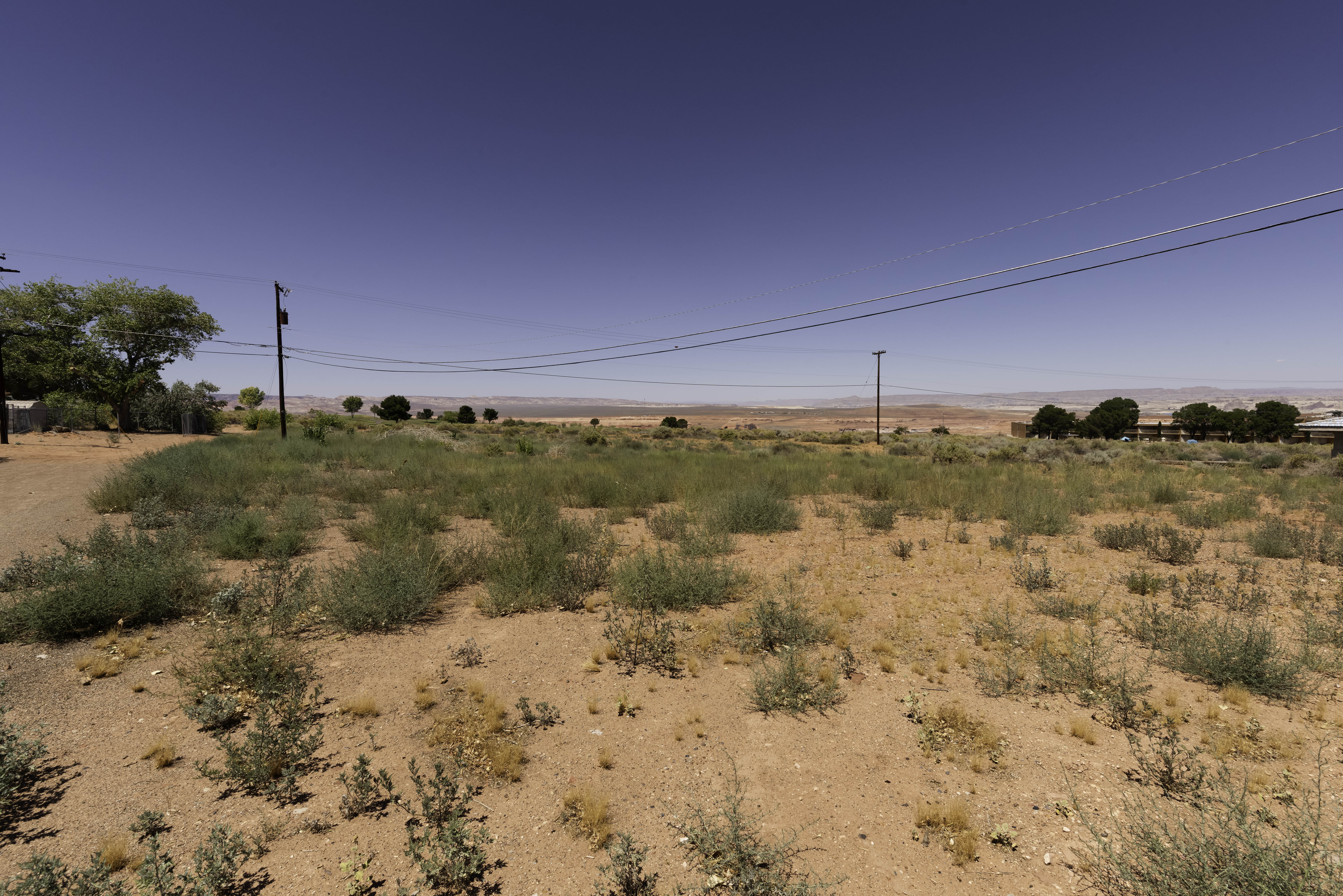
Photo by Bob Hembree
Page City Council Votes to Preserve Entire Frost Park as Public Open Space
Council Overrules Planning Commission in Heated 5.81-Acre Property Debate
By Bob Hembree
The Page City Council voted Wednesday night to rezone the entire 5.81-acre Frost Park property to Parks and Open Space, dramatically expanding beyond the Planning and Zoning Commission's recommendation to preserve only a narrow one-acre strip behind neighboring homes.
The decision culminated years of controversy over the undeveloped city-owned land bordering Lake Powell Golf Course off Vista Avenue, with passionate debates about view preservation, public access, and municipal governance playing out during the July 30 council meeting.
Councilor Alleges Staff Ignored Council Direction
Councilor Debi Roundtree delivered an impassioned critique of how city staff handled the rezoning process, alleging they failed to follow previous council direction to work with citizens on creating a public park.
"This 5.8 is supposed to be it was supposed to be a city park in March and in 2023, three times the board unanimously gave direction to the planning and zoning to meet with the citizens and turn part of it into a park and see if there was a small portion of it that could go back to the city," Roundtree told her fellow council members.
She expressed disappointment with staff implementation of that direction, stating, "When I asked Darren about what was going on in planning and zoning, obviously they were not directed to follow the council's direction. They actually met with a few homeowners, and you can see that it has been designed to preserve a few homeowners views. That was not the intention of that city group."
Narrow Strip Designed to Protect Private Views
The Planning and Zoning Commission had recommended rezoning only a 70-foot-wide strip totaling one acre immediately behind homes that border the property. Councilor Preller, who attended the neighborhood meeting, confirmed the limited scope, describing it as land that "would be a difficult to sell and develop that one acre part of Frost Park."
Roundtree revealed she had been told directly by city employees that the plan was designed around view protection: "When I asked, I was directly told by two city employees that it was handled, that those citizens would have their views. And that when I saw the plat and saw it's drawn, that has nothing to do with utilities or nothing else. It protects those few homeowners and their views."
View Preservation vs. Public Access Debate
The core controversy centered on whether the city should use zoning to preserve private views for adjacent homeowners rather than creating broad public access to the scenic property.
"So once again, we are back to are we going to set a precedent as this board to preserve views?" Roundtree asked. She drew comparisons to other areas where view preservation wasn't provided, noting "The citizens that have come in who thought when they bought their property on the other side of town that their airport was going to be moved and now they're having hangars built in their backyard."
Councilor David Auggie reinforced the council's general opposition to view-based zoning: "I think it's always been a position. I've been on the council about five years and it's always been the position that we don't zone things so that like this open space here where they have their protected views. And I think that's been the issue for the last 30 years or 35 years."
He concluded with a simple philosophy: "If you want it and you want to protect it, buy it."
Historical Context of Decades-Long Controversy
Roundtree emphasized the property's troubled history, stating it "has been bounced around for 35 years and every single time this board is approved for it to be the park and preserved for all citizens to be able to maintain that view."
She expressed frustration with repeated failed attempts: "Something behind the table happens and things like this happen. A developer is going to buy it only I'm really disappointed and you can tell that I'm being emotional about this item."
The property is informally known as Frost Park after Page's first city clerk, Jimmie Frost, who signed the city's incorporation documents in 1975. As previous coverage noted, the memorial park concept emerged in the 1980s when "Jim Frost, a Page city employee, died in the late 1980s when the idea of a memorial park began."
Limited Community Participation in Process
The neighborhood meeting held on May 19, 2025, drew only six local residents, according to the staff report. City Attorney Josh reported that "none of the residents present were opposed to this requested zone change request as it was presented to them."
However, Roundtree suggested this limited participation reflected broader community frustration: "Why they're not here is because the level of apathy of the things that have occurred in regards to this piece of property that they have given up because they are so apathetic to how these things are handled."
She referenced a larger citizen movement that had previously supported the park concept: "I was a part of that group. These hundreds of people, many of them spoke out in this meeting. They were not trying to protect views. They were trying to protect a view for all citizens."
Public vs. Private Benefit Philosophy
Roundtree emphasized the distinction between preserving views for adjacent homeowners versus creating public access: "That this is a special piece of property that all citizens have the opportunity to use and to enjoy that amazing view and a walk within town. And the purpose of the citizens group was to do that."
The debate reflected broader principles about municipal governance and fair treatment. "This cannot set a precedent of approving views," Roundtree argued. "We cannot begin to set a precedent for other homeowners."
Parliamentary Maneuvering Leads to Expanded Preservation
The path to the final decision involved several failed motions and parliamentary procedures. Roundtree initially moved to reject the limited rezoning and preserve the entire parcel, but the motion died without a second.
Councilor Amanda Hammond then proposed sending the matter back to Planning and Zoning "to reconcile to zone the entire parcel for parks and open space." After discussion about whether that was necessary, the motion was modified to have the council directly act.
Councilor Hedinger ultimately crafted the successful motion: "I move to adopt ordinance number 740-25 as amended with sections one and two reduced to a single section to say that the zoning of parcel... Remove section two so that the entire parcel is designated as parks and open space."
Municipal Governance and Trust Issues
The controversy highlighted ongoing concerns about transparency in city decision-making. "The citizens need to trust this council that when they make an anonymous direction that those things happen and not these types of deals behind the table," Roundtree stated.
Her criticism extended to the broader process: "This needs to stop. The citizens need to trust this council that when they make an anonymous direction that those things happen and not these types of deals behind the table."
Implications for Future Development
The decision ensures that the strategically located 5.81-acre parcel near Page's scenic rim will remain available for public use rather than private development. The property borders the Lake Powell National Golf Course and offers views of the surrounding landscape that has made Page a popular tourist destination.
The council's action represents a significant expansion from the Planning and Zoning Commission's recommendation and establishes important precedents about public access to scenic properties versus protection of private views.
As Mayor Bill Diak noted in previous coverage of the controversy, "The only way to protect a view is to buy it," though he had also suggested compromise might be possible. Wednesday's council vote ultimately sided with broad public preservation over the narrow view-protection approach originally recommended by the Planning and Zoning Commission.
The Frost Park decision concludes a decades-long controversy while establishing clearer principles about how Page will balance private property interests with public access to the community's scenic assets.
- Details
- Written by: Bob Hembree
- Category: General News
- Hits: 297
Page City Council to Reconsider Ethics Code
Councilor Calls Previous Vote "Terrible," Seeks Stronger Enforcement
By Bob Hembree
The Page City Council will revisit establishing a Council Code of Ethics after Councilor David Auge successfully lobbied for reconsideration during Wednesday's council meeting, citing disappointment with the body's previous rejection of ethical standards.
"Yes, I think it was terrible that we voted down five to two on the prior one," Auge told his fellow council members during the potential future agenda items portion of the meeting. The previous ethics code was rejected by a 5-2 margin, but Wednesday's show of hands revealed shifting sentiment, with five council members now expressing interest in reconsidering the issue.
Previous Code Lacked Enforcement Mechanisms
Auge acknowledged that the earlier version of the ethics code had significant weaknesses that may have contributed to its rejection. "I understand that it didn't have much teeth to it, but are there any teeth to it?" he said, referring to the lack of enforcement mechanisms in the previous proposal.
The councilor made clear his desire for a more robust version with meaningful consequences, albeit in characteristically colorful language. "I'd actually like to see it where the person is rode out of town on a rail or tarred and feathered. But we need to make something that's more humane," Auge said.
Despite the hyperbolic rhetoric, his underlying message focused on creating effective accountability measures. "But we just need to revisit this and come up with a good code that most of us can abide by," he concluded.
Council Shows Renewed Interest in Ethics Standards
When Mayor Kidman called for a show of hands to gauge support for placing the ethics code on a future agenda, five council members indicated their interest in moving forward with the discussion. This represents a potential shift from the previous 5-2 rejection, suggesting that at least some council members have reconsidered their positions. Only Councilors Debra Roundtree and Amanda Hammond opposed putting the ethics code measure on a future agenda.
The renewed interest comes at a time when questions about municipal governance and public trust have been prominent in city discussions, including concerns raised during recent controversial zoning decisions.
City Attorney Outlines Development Process
City Attorney Josh provided guidance on how the council should approach crafting a new ethics code, emphasizing that staff would not attempt to guess what provisions the council desires.
"Council's already pretty familiar with what we had before," Josh noted. "I don't know how fruitful it would be for staff to try to guess what you want in it. I think the future agenda item would be the time for you to give us direction as to what you want and to have that conversation."
This approach means the upcoming discussion will be primarily policy-focused, with council members needing to specify exactly what ethical standards, enforcement mechanisms, and consequences they want included in any new code.
Broader Context of Governance Concerns
The push for ethics code reinstatement occurs amid various governance challenges facing Page, including interim city management, multiple vacant positions, and ongoing development controversies that have raised questions about transparency and public trust.
Earlier in the same meeting, concerns about behind-the-scenes dealings emerged during a contentious debate over the Frost Park rezoning. Councilor Roundtree expressed frustration about the process, stating, "The citizens need to trust this council that when they make an anonymous direction that those things happen and not these types of deals behind the table."
Path Forward Requires Consensus Building
The council's next challenge will be crafting an ethics code that can achieve broader consensus than the previous version. With the earlier proposal failing by a three-vote margin, supporters will need to address the concerns that led to its rejection while creating meaningful standards for conduct.
The upcoming discussion will require the council to define specific ethical standards, establish enforcement mechanisms, determine appropriate consequences for violations, and create processes for investigating potential ethics violations.
Success will likely depend on the council's ability to balance meaningful ethical standards with practical enforceability while building support among members who were previously divided on the issue.
The ethics code discussion represents part of ongoing efforts to enhance public accountability and restore citizen confidence in local government operations, though the timeline for when this item will appear on a future agenda has not yet been determined.
- Details
- Written by: Bob Hembree
- Category: General News
- Hits: 300
I wrote this article in April to be published on the Chronicle’s 60th anniversary, August 11, 2025. The Chronicle died 5 days short of its 60th birthday. I knew this day would come, but, as you could see in my report, I didn’t want to believe it. I held on to hope.
Sixty Years of Storytelling: Why the Chronicle Still Matters
By Bob Hembree
Founded in a Frontier Town, Still Rooted in Community
On August 11, 1965, as Page emerged from the dust of Glen Canyon Dam construction, a small newsroom opened its doors on the red rock frontier. The Lake Powell Chronicle was born not in a metropolis but in a fledgling city built by engineers, laborers, and dreamers.
That first issue carried the voices of a town still inventing itself—stories of workers, families, schoolchildren, and water. Sixty years later, we’re still here, still chronicling the life of this unique place, still listening.
The Danger of Disappearing Papers
The Chronicle’s 60th anniversary comes during a time of profound challenge for local journalism. Since 2005, more than 2,500 newspapers across the U.S. have closed. More than 200 counties have no newspaper at all. And over 1,500—including rural counties in Arizona—have only one paper left.
In communities like ours, the loss of a local newspaper doesn’t just mean fewer headlines. It means higher costs, deeper divisions, and a dimmer civic light.
A landmark study from Notre Dame and the University of Illinois-Chicago found that when a local newspaper closes, municipal borrowing costs rise. Without journalists monitoring city budgets and bond proposals, financial oversight weakens—and taxpayers pay the price. One documented case showed that bond interest rates rose by as much as 37 basis points after a major newspaper shut down.
That’s not just theory—it’s money out of your pocket. And in towns like Page, where bond funding supports infrastructure, fire protection, schools, and public safety, the cost of silence is too high.
A Town Needs Its Truth-Teller
The Lake Powell Chronicle has never been just a newspaper. We are the town’s long-term memory, its morning pulse, and its stitched-together narrative. We’ve covered everything from city council disputes to Navajo Generating Station closures. From boat races to boil orders. From school sports to sacred landscapes.
Without a local newsroom, these stories risk vanishing. And when they vanish, so do the threads that hold a place together.
We don’t chase viral clicks. We chase agenda packets, arrest logs, festival flyers, and flood warnings. We knock on doors. We quote directly. We correct errors. We show up to meetings, even when no one else does. That’s our job. That’s our promise.
Rural Arizona Is on the Frontline
Page is not Phoenix. That’s the point. In cities like ours, a single newspaper may be the only watchdog, the only cultural platform, and the only consistent record-keeper.
And yet, these are the very places most at risk. Circulation drops. Advertising dollars shift to social media giants. Costs rise. Rural newsrooms get smaller, and eventually, they go dark.
We refuse to let that happen here.
Still Here Because You Are
For sixty years, we’ve printed your weddings and your obituaries, your victories and your heartbreaks. We’ve documented six decades of a region that continues to awe and evolve.
We are grateful—for every subscriber, every advertiser, every reader who clipped a headline or sent us a tip. The Chronicle endures because Page believes local news is worth preserving.
Our Pledge for the Next Sixty Years
We pledge to keep digging, questioning, attending, and recording. To stay grounded in Page, even as we evolve online. To represent not just government affairs, but the voice of the community—its elders, youth, workers, artists, tribes, and entrepreneurs.
Sixty years in, the ink still matters.
Here’s to the next sixty.
- Details
- Written by: Bob Hembree
- Category: General News
- Hits: 390

One of NASA's GRACE-FO satellites at the IABG testing facility, an Airbus subcontractor, in Munich, Germany.
Photo by Airbus DS GmbH/A. Ruttloff
Arizona's Invisible Water Emergency and Page's Role in the Solution
By Bob Hembree
High above Arizona, NASA satellites detect something invisible to the human eye: the equivalent of more than two Lake Meads vanishing underground. While residents across the state go about their daily lives, the Colorado River Basin has lost approximately 34 cubic kilometers—equivalent to 28 million acre-feet—of groundwater from 2003 to 2025, representing more than twice the combined depletion of Lake Mead and Lake Powell.
This staggering loss represents one of the most dramatic water crises in American history, yet it remains largely invisible to the communities it threatens. The alfalfa fields of southern Arizona seem worlds away from Page's red rock landscape and Lake Powell shoreline, but their drying wells could soon reshape this northern Arizona community in ways residents never anticipated.
The Hidden Crisis Revealed by Science
NASA's Gravity Recovery and Climate Experiment (GRACE) and its follow-up mission GRACE-FO have revolutionized our understanding of water storage by measuring minute changes in Earth's gravitational field caused by shifts in water mass. The satellite data reveals that:
- Groundwater depletion accounts for 65-71% of the basin's total water storage loss, surpassing surface water loss as the primary driver
- The rate of groundwater loss has doubled in recent years in some Arizona regions, particularly in western and southeastern counties
- Ancient groundwater sources provide 41% of Arizona's water—resources that aren't replenished at meaningful rates
What's Driving the Crisis
The accelerating groundwater loss stems from multiple converging factors:
- Agricultural demands: Irrigation for water-heavy crops like alfalfa accounts for about 75% of groundwater pumping in unregulated rural areas
- Climate change: Rising temperatures and a 20% decline in Colorado River flows this century
- Regulatory gaps: 82% of Arizona has no groundwater pumping restrictions
- Weather patterns: The transition from El Niño to La Niña has shifted winter precipitation patterns
Arizona's Groundbreaking Response
Despite the alarming scale of depletion, Arizona has demonstrated remarkable innovation in water management. The state's comprehensive approach shows how policy solutions can operate at the scale of the crisis itself.
Historic Conservation Achievements
The Ag-to-Urban Program: On June 30, 2025, Governor Katie Hobbs signed Senate Bill 1611, creating Arizona's "Ag-to-Urban" Groundwater Conservation Program. The Arizona Department of Water Resources estimates this voluntary program could save nearly 10 million acre-feet of water over its lifetime—more than one-third of the groundwater already lost from the Colorado River Basin.
"The Ag-to-Urban water conservation legislation shows what we can achieve when state policymakers come together to focus on solving the problems that Arizonans care about most," said Governor Katie Hobbs. "I have fought day in and day out to protect Arizona's water while growing our economy, and I am proud to have brokered a bipartisan, historic water deal that will save millions of acre-feet of water, help lower the cost of housing, and create jobs."
The legislation passed with bipartisan supermajority support in the Senate and a bipartisan majority in the House. State Senator T.J. Shope called it "the most consequential piece of groundwater conservation legislation since the 1980 Groundwater Management Act," adding: "Hard-working Arizonans will be able to pursue their American dream of homeownership as home supply increases in Maricopa and Pinal Counties and prices naturally ease. Our farmers, who are ready to retire, can reap the benefits of their land while also allowing the state to save water."
Managed Aquifer Recharge Success: From 1989 to 2019, strategic water management added approximately 25 cubic kilometers to Phoenix, Tucson, and Pinal County aquifers through:
- 10.5 cubic kilometers through intentional banking policies
- 14.2 cubic kilometers from incidental irrigation seepage
New Water Sources: Arizona approved the first-ever groundwater transportation order from the Harquahala Basin on July 18, 2025, authorizing the City of Buckeye and Town of Queen Creek to withdraw up to 10,926 acre-feet annually (5,926 and 5,000 respectively) from a supply exceeding 8 million acre-feet.
"This approval from the Arizona Department of Water Resources unlocks another water supply that Arizona can use to support our communities, economy, and way of life," said Governor Katie Hobbs. "We will continue to develop creative solutions and new water supplies as we fight to protect our Colorado River water and the aquifers that Arizonans rely on."
Federal Coordination Efforts
The Department of the Interior secured 18 conservation agreements with water users in Arizona and California that will conserve approximately 321,000 acre-feet of water in Lake Mead—equivalent to adding about five feet to the reservoir's elevation.
Page's Unique Position and Evolving Role
While much of Arizona faces this underground water emergency, Page operates under different circumstances that position it uniquely within the broader crisis.
Current Water Security
Current Water Profile
Coconino County's water supply breakdown shows the regional context:
- Surface water: 50% of total supply
- Groundwater: 44% of total supply
- Reclaimed water: 6% of total supply
In 2015, groundwater accounted for 18.52 million gallons per day in Coconino County, with usage patterns showing:
- Domestic use: 60.7% of groundwater consumption
- Agricultural use: 25% of groundwater consumption
- Commercial use: 14.2% of groundwater consumption
Page relies primarily on surface water piped from Lake Powell via Glen Canyon Dam, rather than local groundwater wells. This provides relative water security compared to groundwater-dependent communities, though recent historic low levels have required infrastructure adaptations to maintain access.
Changing Regional Relationships
The Navajo Nation's $43 million LeChee Water Improvements Project, signed in May 2025, exemplifies evolving regional dynamics. The comprehensive project includes:
- A membrane water treatment plant producing one million gallons daily
- 31,000 feet of 12-inch pipeline with renovated Lake Powell intake systems
- Ten times more water capacity for LeChee, reducing dependence on Page's infrastructure
"This was never just about water," said Delegate Helena Nez Begay. "It was about building a future where our children do not have to haul water just to cook or bathe."
Navajo Department of Water Resources Director Jason John emphasized the economic transformation: "The Navajo Nation owns this intake. With this water project, LeChee will have ten times more water available for economic development."
Page's Blueprint for Regional Leadership
While communities across Arizona grapple with disappearing groundwater, Page stands at a crossroads. The city can either remain a passive observer of the state's water crisis or transform itself into a model of water resilience and regional leadership.
Leveraging Technology and Data
NASA's GRACE satellites provide unprecedented insight into water storage changes throughout Arizona and the Colorado River Basin. Page could pioneer the integration of this technology with local water management systems to:
- Monitor regional water conditions in real-time
- Make informed decisions about infrastructure investments
- Support both current water security and long-term planning
NASA's Applied Sciences Water Resources Program offers decision-support tools for sustainable management and collaborates with agencies to strengthen water resource resilience.
Building on Proven Success
Arizona's documented successes provide concrete models for regional leadership:
- 25 cubic kilometers of managed aquifer recharge from 1989 to 2019
- 10 million acre-feet projected savings through the Ag-to-Urban program
- 321,000 acre-feet conserved through federal agreements
Page's experience with surface water management, combined with these proven policy frameworks, positions the city to lead regional water innovation rather than simply adapt to changing circumstances.
Federal Coordination Opportunities
Arizona's strategic positioning in federal water negotiations provides Page with opportunities to contribute to solutions that strengthen the entire Colorado River system. The success of conservation agreements demonstrates how local innovation connects to federal coordination.
Bureau of Reclamation Acting Commissioner David Palumbo emphasized: "These agreements represent the continued collaboration within the Colorado River Basin as we all look to secure the needed near-term water supplies."
Conservation and Efficiency Strategies
Current water usage patterns in Coconino County provide opportunities for regional impact. With some areas like Flagstaff depending on groundwater for 50-90% of their municipal water supply, conservation efforts could significantly reduce pressure on regional water supplies.
Page's experience managing water for seasonal population fluctuations associated with tourism provides insights that could benefit other communities facing variable demand. Agricultural water use accounts for 25% of groundwater consumption in Coconino County, suggesting collaboration between urban and rural areas could support more efficient practices while maintaining agricultural viability.
Regional Partnership Models
The transformation from traditional supplier-dependent relationships to collaborative partnerships strengthens entire regions. Page's role can evolve from managing water dependency to facilitating regional water coordination.
Regulatory Context: Unlike some Arizona regions, Coconino County falls outside Active Management Areas where groundwater pumping faces stricter regulation. This means private well pumping remains largely unregulated across much of the county, creating potential for overuse and aquifer depletion even in areas that haven't yet experienced severe water stress.
The success of managed aquifer recharge programs elsewhere in Arizona—adding 25 cubic kilometers to Phoenix, Tucson, and Pinal County aquifers—provides models for how northern Arizona communities could work together on strategic water planning that benefits all participants.
Long-term Planning and Resilience
The accelerating rate of groundwater loss throughout Arizona creates urgency around long-term water planning. Page's current water security provides time and resources for proactive planning that could benefit both the city and surrounding communities.
Key Challenges to Address
- Climate change affects both surface water sources like Lake Powell and groundwater recharge
- Wildfire risks and urbanization threaten water quality and recharge processes
- Emergency preparedness for water system disruptions requires regional coordination
Opportunities for Innovation
Page could become a model for regional water innovation by:
- Integrating advanced monitoring technology with proven conservation approaches
- Contributing to federal water negotiations based on surface water management expertise
- Pioneering regional partnership models that benefit all basin communities
A Model for the Future
Arizona's groundwater challenges, combined with unprecedented conservation achievements and evolving regional partnerships, present Page with concrete opportunities to lead water innovation rather than simply respond to changing conditions.
The state's demonstration of comprehensive water management—from 25 cubic kilometers of managed aquifer recharge to 10 million acre-feet of projected Ag-to-Urban savings—provides proven models that Page can adapt and advance.
Former Governor Bruce Babbitt's praise for current leadership demonstrates the continuity of Arizona water innovation: "The passage of Senate Bill 1611 is an outstanding accomplishment, and testament to Governor Hobbs' leadership in delivering solutions on water policy. This legislation is good for our aquifers, good for our residents, and good for our farmers. It proves once again that Arizonans, by working together, can assure our water future."
What’s Next?
The choices Page makes about engaging with proven state policy frameworks, contributing to federal water negotiations, and pioneering regional partnership models will determine whether the city becomes part of Arizona's continued water leadership or simply another community that missed opportunities to help shape solutions at the scale of current challenges.
Page has the opportunity to contribute to Arizona's proven track record of water innovation rather than passively benefit from water security. The combination of successful conservation programs, evolving tribal partnerships, federal coordination agreements, and demonstrated aquifer recharge success provides multiple pathways for regional leadership that build on documented successes rather than theoretical possibilities.
As the satellite technology that revealed the Colorado River Basin's 34 cubic kilometers of groundwater loss also enables precise monitoring of conservation successes, Page could pioneer approaches that create templates for other Colorado River communities facing similar challenges.
The transformation of regional water relationships, exemplified by projects like LeChee's achievement of water independence, demonstrates how traditional relationships can evolve into collaborative partnerships that strengthen entire regions—building a future where communities work together to ensure water security for generations to come.
Sources: NASA Earth (Groundwater Loss in Arizona and the Colorado River Basin), Water Resources Research Center Arizona (Coconino County Water Fact Sheet, March 2024), Arizona State University Water Innovation Institute, NASA Applied Sciences Water Resources Program documentation, KNAU Arizona News & NPR reports on regional water infrastructure and planning initiatives, Arizona Department of Water Resources press releases (June 30 and July 18, 2025), 2023 Governor's Water Council Recommendations, Arizona Senate Bill 1611 and 1242, University of Texas Jackson School of Geosciences groundwater research, U.S. Department of Interior conservation agreements, Navajo Nation LeChee Water Improvements Project (May 2025).