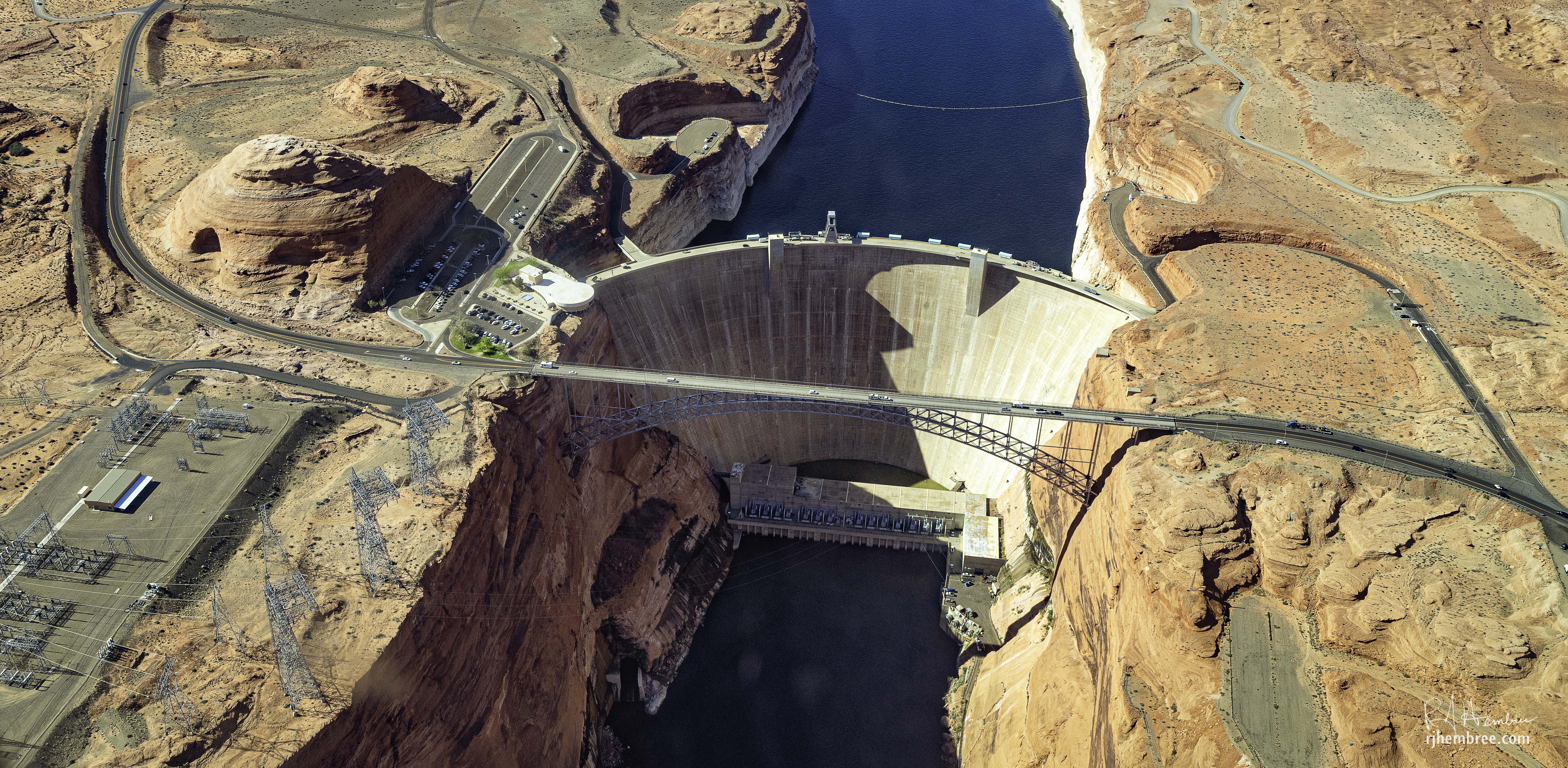
 The political and physical boundaries of the Colorado River have always been defined by concrete. For over a century, the story of Western water was told through massive structures like Hoover Dam and the Glen Canyon Dam, or the multi-hundred-mile canals carving through the desert.
But as the 1922 Colorado River Compact faces a slow, climate-driven collapse, the next chapter of Western water policy is being written inside an industrial corridor in Carson, California.
In February 2026, the Metropolitan Water District (MWD) of Southern California cleared a monumental hurdle by unanimously certifying the Final Environmental Impact Report for Pure Water Southern California. Long known simply as the "Carson Project," this multi-billion-dollar advanced water purification venture is no longer just a local drought mitigation strategy. It is rapidly morphing into an unprecedented bargaining chip that could redefine water allocations across state lines.
Shifting From Importation to Total Self-Reliance
For decades, MWD has operated as the nation's largest water wholesaler, serving as the foundational straw for 19 million residents across six coastal counties. Historically, that meant importing massive volumes of water from two primary sources: the State Water Project in Northern California and the Colorado River.
However, with Lake Powell hovering near historic lows and the Bureau of Reclamation hacking down downstream releases to protect the grid, those old importing structures are increasingly fragile.
Pure Water Southern California represents a structural decoupling from these distant water systems. Rather than looking over the mountains for its next drop of water, MWD is looking down.
The strategy relies on capturing treated municipal wastewater from the Los Angeles County Sanitation Districts’ A.K. Warren Water Resource Facility. Currently, this massive effluent stream is treated to standard secondary levels and pumped straight out into the Pacific Ocean. MWD plans to intercept this water, subject it to an intensive multi-stage purification process—including reverse osmosis and advanced oxidation—and put it back to work.
The Production Scale: At full capacity, the Carson facility is designed to generate up to 150 million gallons per day (MGD), or roughly 155,000 acre-feet of water annually. That is enough reliable, drought-proof supply to serve 1.5 million people, effectively replacing the 20 percent chunk of MWD’s portfolio most vulnerable to Colorado River shortages.
The 60-Mile Underground Network
Harvesting the water is only half the battle; the infrastructure required to distribute it is equally staggering. Because California water regulations historically favored indirect potable reuse, the purified water cannot simply be piped directly into kitchen faucets.
Instead, the project outlines a massive 40-to-60-mile underground pipeline network pushing north and east out of Carson.
[Carson Purification Facility]
         │
         ▼ (60-Mile Underground Pipeline)
         ├─► Central Groundwater Basin (Injection & Recharging)
         ├─► West Coast Groundwater Basin (Injection & Recharging)
         └─► Main San Gabriel Basin (Spreading Grounds)
By pumping this highly purified water into regional groundwater tables, MWD accomplishes two goals simultaneously:
-
Storage Expansion: It replenishes heavily depleted local aquifers that have been over-pumped by municipal systems for nearly a century.
-
System Integration: The pipeline will hook directly into MWD's existing regional treatment plants, allowing purified water to blend seamlessly with traditional imported supplies before hitting the wholesale distribution grid.
The Financial Reality: Paying for the Future
An initiative of this magnitude carries a sobering price tag. Current estimates peg the construction and design costs for Phase 1 of Pure Water Southern California at $6.4 billion, with total lifecycle costs potentially climbing higher depending on pipeline routing complexities.
To jumpstart the work, the MWD board recently approved a $150 million allocation dedicated strictly to the final design phase of Stage 1, which will target an initial output of 45 MGD.
To fund these massive capital investments while simultaneously maintaining an aging delivery network, Southern California water users are already footing the bill. In April, the MWD board adopted a two-year budget that institutes back-to-back 6.2% wholesale water rate increases set to take effect on January 1, 2027, and January 1, 2028. For the average homeowner, these wholesale hikes trickle down through municipal retail agencies alongside a modest increase in regional property tax levies.
The Multi-State Twist: Trading Wastewater for Colorado River Water
While the local engineering and financial components are impressive, the truly radical element of the Carson Project is how it is being leveraged across the wider Colorado River Basin.
Historically, Upper and Lower Basin states have spent decades locked in zero-sum litigation over every acre-foot of river water. The Carson Project is breaking that gridlock by turning Southern California's wastewater into a tool for interstate collaboration.
Water managers from the Southern Nevada Water Authority (SNWA) and the Arizona Department of Water Resources aren't just watching the project from afar—they are actively writing checks to help fund it.
How the Interstate Funding-for-Water Swap Works:
-
Step 1: Out-of-state partners like Arizona and Nevada provide direct capital to help California build and operate the Pure Water Southern California facility.
-
Step 2: Once the Carson plant online and begins pumping recycled water into Los Angeles basins, MWD intentionally reduces its intake from the Colorado River.
-
Step 3: A matching portion of California’s highly senior legal river allotment is left upstream in Lake Mead. Arizona and Nevada are then permitted to draw that water directly from the reservoir.
This mechanism represents a complete paradigm shift. By funding advanced recycling in California, landlocked states like Arizona can effectively "create" new water allocations for themselves while simultaneously propping up critical elevations in Lake Mead to prevent a system-wide crash.
A Replicable Blueprint for the Arid West
As the Bureau of Reclamation works to finalize its post-2026 operational guidelines, the Carson experiment offers a glimpse at how urban centers must adapt. The old model of fighting for a larger slice of a shrinking river is legally exhausting and hydrologically impossible.
The MWD model proves that the future of Western water security lies in regional interdependency. If a coastal metropolis can successfully monetize its wastewater to trade for senior river rights upstream, it opens the door for similar large-scale recycling frameworks across the Southwest—turning municipal conservation into the ultimate reservoir stabilization tool.