
 Introduction
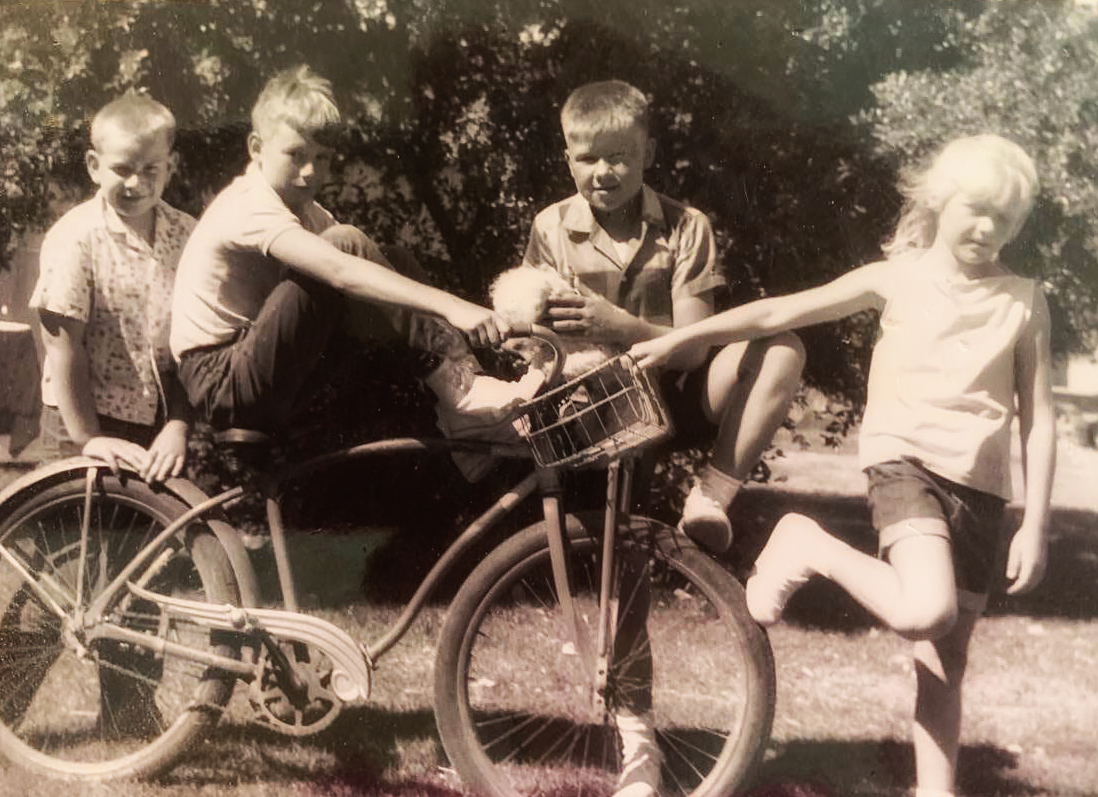
The streetlamps of mid-century America did not merely illuminate asphalt; they functioned as a secular curfew, a collective agreement between the adult world and the wild, unmapped republic of childhood. To look back at the late twentieth century is to perform an excavation of a vanished topography—the vacant lot overgrown with chicory, the drainage ditch transformed into a glacial canyon, the woods where time was measured not by digital pings but by the creeping slant of shadows across oak bark. In this analog kingdom, children were the great, unmonitored cartographers of the mundane.
Then, a quiet, tectonic shift occurred. By the early 1980s, an unfamiliar phrase entered the cultural lexicon, carrying the weight of a sudden ice age: stranger danger. It was a linguistic turning point, an archaeological marker where the outdoors—once viewed as a benign laboratory for the soul—was abruptly reimagined as a landscape of ambient peril. Slowly, systematically, the boundaries of childhood contracted. The bicycle, which once represented a radical engine of geographic autonomy, was relegated to the driveway. The neighborhood peer culture, which for generations had self-governed, negotiated its own rules, and settled its own disputes in the dirt, was dismantled and replaced by the adult-orchestrated choreography of soccer leagues and structured playdates. We did not merely bring our children inside; we closed the wilderness behind them.
Today, a loud and frantic consensus points to the glowing pane of the smartphone as the sole architect of our current youth mental health crisis. Critics look at the sharp rise in teenage anxiety and depression post-2010 and diagnose it as a purely technological poisoning—a generation rewired by algorithms. But this diagnosis suffers from a profound historical amnesia. It ignores the reality that youth psychiatric emergencies and suicide rates achieved a massive, tragic peak in 1990, long before the first iPhone was ever conceived. It treats the world as if it began yesterday, failing to see that the digital screen is not the predator that drove children from the wild; it is the life raft they built to survive the isolation of the indoors.
What happens to a species biologically hardwired to learn through the deep, evolutionary necessity of self-directed play when it is placed under permanent, adult surveillance? If we strip away the physical territory of youth, strip away the minor, necessary risks of climbing trees and navigating neighborhoods—risks that act as a natural cognitive inoculation against anxiety—where else can the adolescent soul go to escape the autocratic gaze of the adult world? To understand the anxious generation, we must look past the device in their hands and peer into the institutional architectures we constructed around them. This is not a story of technology ruining childhood; it is a story of a society that revoked a child's right to be free, and the digital wilderness they migrated to when the real world was locked away.
The Historical Amnesia: Deconstructing the 2010 Timeline
The prevailing narrative of our modern malaise posits 2010 as a Year Zero, the moment the smartphone’s arrival fractured the psyche of an entire generation. Yet, this diagnosis relies on a convenient historical amnesia, a refusal to look beneath the strata of the present to see what was crumbling long before the first swipe-to-unlock screen. To understand our current crisis, we must excavate the decades that preceded the digital age, where we find that the foundations of adolescent well-being were already fracturing under a different set of pressures.
The data, when stripped of its contemporary biases, reveals a sobering archaeology of the spirit. Between 1950 and 1990, the United States witnessed a near-linear, fourfold increase in teenage suicide rates—a harrowing trajectory that unfolded in a world devoid of social media, constant digital connectivity, or the algorithmic pressures we now view as the primary culprits of misery. This statistical surge suggests that the roots of youth anxiety were sinking deep into the American soil well before the turn of the millennium, flourishing during a time when children were meant to be enjoying the mythical "golden age" of analog freedom.
The shift was quiet, gradual, and devastatingly thorough. By 1980, the term "stranger danger" had burrowed into the cultural consciousness, transforming the neighborhood—once an expansive laboratory of social discovery—into a landscape imagined to be teeming with ambient, existential peril. This was the era in which the bicycle ceased to be a vehicle of liberation and became a piece of stationary equipment in a garage, as parents, fueled by rare but amplified media tragedies, began to see independent mobility as an act of negligence.
Yet, in a counter-intuitive twist of the historical record, the period between 1990 and 2010 offered a momentary reprieve. As personal computers entered the home and the early internet began to hum in the background of family life, indicators of youth mental health actually showed signs of improvement. In these digital spaces, children found what had been stolen from them in the physical world: a sanctuary where they could socialize, experiment, and govern their own interactions, largely shielded from the relentless, surveillance-heavy gaze of the adult world. By treating 2010 as the moment of origin, we mistake the digital life raft for the storm that caused the shipwreck, ignoring the forty years of steady erosion that left an entire generation searching for a way out.
Evolution, Resilience, and the Biology of Play
To understand why a child wilts under the warmth of a smartphone screen, one must first look at the deep, ancient clay from which our species was molded. For hundreds of thousands of years, the young of the human animal did not grow up by being lectured, sorted, or surveilled. From the hunter-gatherer bands of our deep past to the rural thresholds of the early twentieth century, childhood was defined by a single biological imperative: self-directed play.
Play is not the mere absence of work; it is the evolutionary mechanism through which mammals learn to survive. In the theater of the unmonitored world, play operates as a two-sided coin of self-education. On one side is curiosity, the instinctual drive to explore, drop, bend, and break the physical environment to acquire knowledge. On the other side is play, the engine by which a child acquires social, physical, and emotional skills. When children scramble up the rough bark of an oak tree, slide down steep mud banks, or build secret forts out of fallen branches, they are not merely burning off energy. They are engaging in what psychologists call "risky play."
From an evolutionary standpoint, this mild, self-regulated exposure to danger is a profound form of cognitive behavioral therapy. By climbing just high enough to evoke a thrill of fear, or by navigating a neighborhood beyond the line of parental sight, a child intentionally inoculates their own nervous system against chronic anxiety. They learn the foundational lesson of resilience: I am afraid, but I am capable of saving myself.
When the adult world systematically dismantled this physical territory—replacing the organic chaos of the vacant lot with the regimented, adult-directed compliance of sports leagues and hyper-structured activities—we broke a vital biological feedback loop. Organized leagues do not foster true play; they replicate the autocratic power structure of the classroom, turning children into puppets who look to an adult whistle for permission. By stripping away independent mobility and minor risks, we did not make children safe. We merely starved them of the precise evolutionary experiences required to build a resilient mind, leaving them neurologically fragile and deeply susceptible to the ambient anxieties of a world they were never permitted to master.
The Screen as a Digital Refuge
When the borders of the physical world are closed, the human spirit does not cease its yearning for expansion; it merely migrates to a different terrain. To view the smartphone screen as a parasitic invader that lured children away from the sunlight is to misread the direction of the current. The screen became a destination only after the neighborhood became a forbidden zone. For a generation locked inside by the invisible walls of overprotective parenting and suburban isolation, the internet did not destroy the playground—it inherited it.
In the digital wild, teenagers found the one thing adult society had systematically denied them: an unregulated domain where they could find autonomy away from the relentless, curatorial gaze of parents and educators. Here, out of sight of the adult whistle, they could gather, build status, experiment with identity, and learn the clumsy, essential art of peer negotiation. To understand this digital migration, however, one must make a critical distinction between the types of vessels kids use to navigate this new ocean. As Mitch Resnick has long observed, there is a profound, structural difference between a child who sits passively, letting an algorithmic tide wash over them through mindless social media scrolling, and a child who uses the technology as an interactive canvas—modifying gaming environments, building digital architecture, or stitching together code on platforms like Scratch. The latter is not an act of addiction; it is the ancient, evolutionary instinct of play manifesting through silicon and pixels.
This perspective is quietly vindicated by the very data that technophobes often weaponize. When researchers like Amy Orben and Andrew Przybylski at Oxford subjected the smartphone panic to rigorous, large-scale empirical analysis, tracking hundreds of thousands of adolescents, the terrifying monster of digital ruin shrank to a statistical dust mote. They discovered that the actual correlation between screen time and a teenager's lower well-being hovers around a negligible 0.4 percent—an impact roughly equivalent to eating potatoes or wearing eyeglasses.
More crucially, longitudinal data reveals that the popular narrative has inverted the entire flow of cause and effect. It is not that healthy, thriving children are being dragged into depression by the glow of the screen; rather, it is that social anxiety, isolation, and depression typically precede heavy device use. The lonely child, stranded in a quiet house while the empty streets outside remain under adult surveillance, turns to the device not to escape a rich physical life, but to find a digital life raft. The smartphone is not the predator that chased them from the wild; it is the makeshift sanctuary they built because the wild was taken away.
The Institutional Squeeze: High-Stakes Schooling
If the smartphone is a digital life raft, we must look closer at the sinking vessel from which adolescents are fleeing. Around the year 2010, while the public eye was trained on the mesmerizing glow of the handheld screen, a massive, quiet bureaucratic glacier was sliding across the landscape of American childhood. This was the era of the Common Core State Standards and high-stakes testing regimes, an institutional shift that fundamentally altered the ecosystem of the American classroom. School, an institution that already possessed a heavy cultural halo, was quietly transformed from a place of intellectual discovery into a pressure cooker of metricized performance.
Under the new federal mandates, funding and teacher evaluations were tied directly to the clinical output of standardized test scores. The classroom began to lose its organic rhythms. Teachers, disempowered and micromanaged by administration, felt their professional wisdom slip away; they were forced to "teach to the test," abandoning creative exploration in favor of rigid curriculum compliance. In the process, the remaining margins of childhood freedom within the school day were systematically trimmed. Recesses were truncated or eliminated entirely; homework crept downward into the early primary grades, transforming the domestic evening into an extension of the industrial school day.
The psychological toll of this institutional squeeze was captured with startling clarity by the American Psychological Association’s Stress in America surveys. In 2009, on the eve of this nationwide educational shift, 43 percent of teenagers identified school as their primary source of stress. By 2013, as the administrative mechanisms of high-stakes testing became fully functional across the country, that number did not merely rise—it doubled to a staggering 83 percent. No other stressor—not peer bullying, family discord, or body image—came close to the institutional weight of the classroom.
The most profound diagnostic proof of this school-induced trauma lies in the seasonal rhythms of adolescent suffering. Every June, a great biological exhalation occurs across the country. As the school doors close for the summer, youth psychiatric admissions, instances of severe anxiety, and teen suicide rates drop precipitously, falling like a receding tide. For three months, when the metrics cease and the surveillance thins, the adolescent psyche finds room to breathe. Then, with the return of the September leaves and the ringing of the first autumn bell, the indicators of crisis spike upward once more. We have built a world where our children prefer the unregulated wilderness of a digital device to the suffocating, hyper-surveilled reality of the modern school, and yet we wonder why they refuse to put down their phones.
Pathways to Restoration
To mend a landscape so deeply fractured, we cannot simply snatch the digital lifeline from our children’s hands and declare the water safe. If we wish to coax them back into the physical world, we must first restore the territory we stole from them. True healing requires that we dismantle the architecture of hyper-surveillance and over-regulation that spans the home, the neighborhood, and the classroom.
The restoration begins at the threshold of the domestic front. We must learn the difficult, counter-cultural art of stepping back. Movements like Let Grow offer a practical compass for this retreat, urging parents to consciously normalize independent mobility. This means allowing children to walk to the local corner store, ride their bikes until dusk, and explore the unmonitored margins of their towns without an adult chaperon or a GPS tracker monitoring their every heartbeat. We must intentionally cultivate an environment where a minor scraped knee or a missed turn is viewed not as a parental failure, but as a vital milestone of competence. Resilience cannot be taught via a lecture; it must be discovered in the quiet triumph of a child realizing they can navigate the world on their own.
Simultaneously, we must courageously reimagine our approach to education, looking toward models that honor the biological design of youth rather than the clinical output of standardized testing. Institutions like the Sudbury Valley School provide a historical blueprint for this transformation. For over half a century, such democratic educational spaces have demonstrated that when children are trusted with their own time, freed from arbitrary age segregation, and allowed to govern their own community through a collaborative rule of law, they do not lapse into anarchy. Instead, they learn to read, write, and think because those skills are organically required to navigate a rich environment. By treating democracy not as a textbook subject to be tested, but as a daily, lived experience, we can transform the classroom from an engine of chronic anxiety into a sanctuary of self-directed purpose.
Ultimately, the deepest shift must occur within the parent’s own heart. In a society obsessed with metricized achievement, parents must aggressively decouple their love and validation from a child’s performance, grades, and extracurricular trophies. The most psychologically resilient teenagers in high-stakes environments are invariably those whose parents make it unequivocally clear that they are loved for who they are, not for how they rank. When we assure our children that their identity is their own choice and that our support is unconditional, we lift the suffocating weight of perfectionism from their shoulders. If we truly want our children off their screens, we must give them back a physical world—and a domestic life—that is actually worth living in.
Conclusion
The streetlamps of America still flicker on at dusk, but they no longer call a generation home from the wild. They illuminate empty sidewalks, quiet parks, and vacant lots where the chicory grows undisturbed by the footprints of children. To look across the landscape of contemporary childhood is to witness a kingdom whose citizens have migrated en masse, leaving the physical geography of their ancestors to inhabit a wilderness of silicon, light, and pixels.
The frantic push to ban smartphones, outlaw social media, and erect digital fortresses around our youth misdiagnoses the true nature of this great migration. It mistakes a frantic, survivalist retreat for an act of unprovoked defection. If we forcibly confiscate the digital life raft while leaving the physical territory of childhood locked away, we will not magically return our children to the analog paradise of the mid-twentieth century. We will merely leave them stranded in the suffocating isolation of an over-regulated, hyper-surveilled, and relentlessly performance-driven existence, stripped of the last remaining space where they can exercise their evolutionary right to be free. The smartphone panic is a convenient distraction, an administrative scapegoat that spares us from looking into the mirror and confronting the claustrophobic world we built in the name of safety and achievement.
The youth mental health crisis is an authentic, heartbreaking emergency, but its resolution demands a deeper courage than passing a phone ban or tightening an algorithmic filter. It requires a profound cultural paradigm shift—a willingness to return the physical world to our children and to return our children to the world. We must step back from the edge of the playground, dismantle the high-stakes sorting machines of our schools, and decouple our parental devotion from the metrics of a standardized test. We must trust the ancient, biological wisdom of self-directed play and curiosity, understanding that resilience is not a commodity to be taught in a classroom, but a muscle that can only be forged through independent exploration, minor risks, and unmonitored failures.
If we truly wish to heal the anxious generation, we must open the doors, quiet the adult whistles, and give them back their autonomy. Only when the physical world is once again treated as a sanctuary of freedom will our children find a reason to lay down their digital life rafts and step back out into the sun.